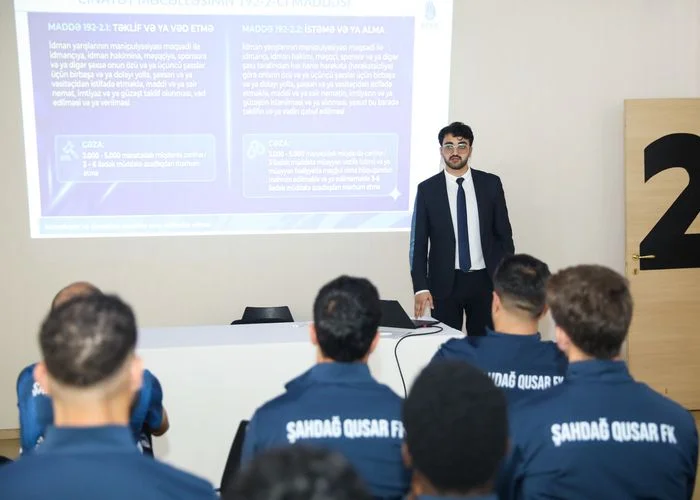
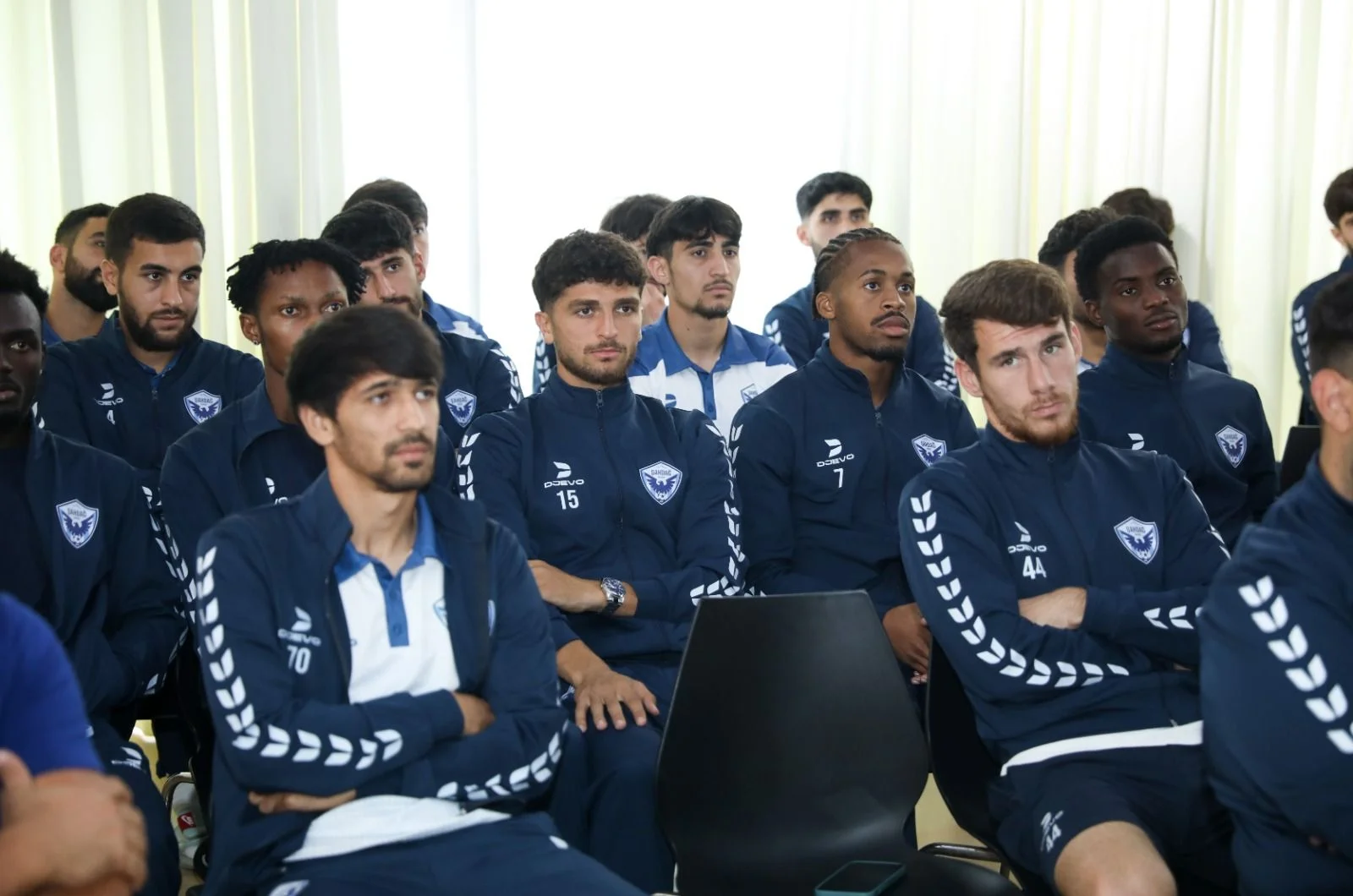
AFFA’s Compliance and Anti-Match-Fixing Department has organised anti-match-fixing awareness sessions for first-team players and coaching staff at First League clubs “Shahdag Qusar”, “Baku Sporting” and “Khankendi”.
Fanat.az reports that the information was released by the association’s press service.
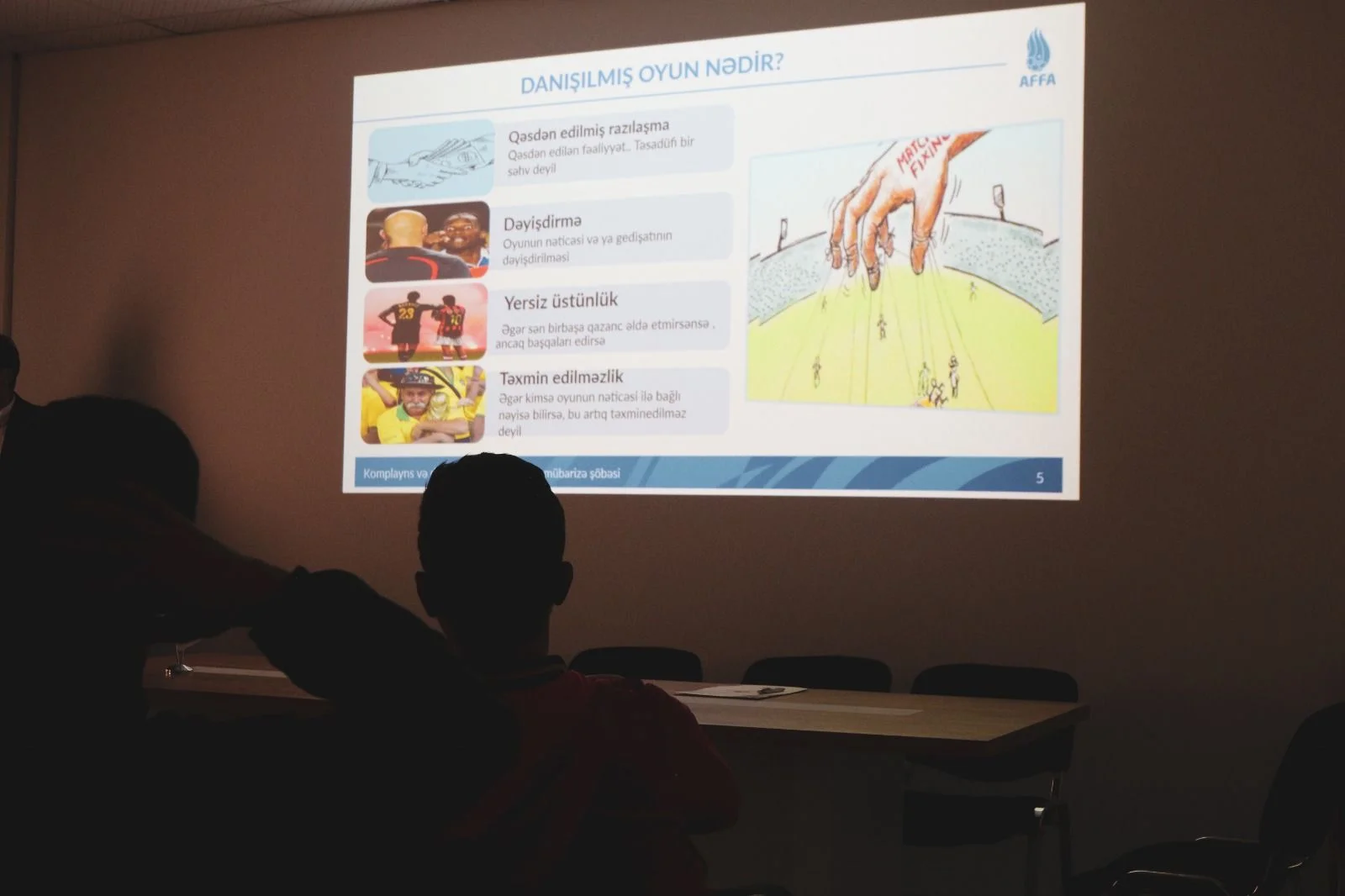
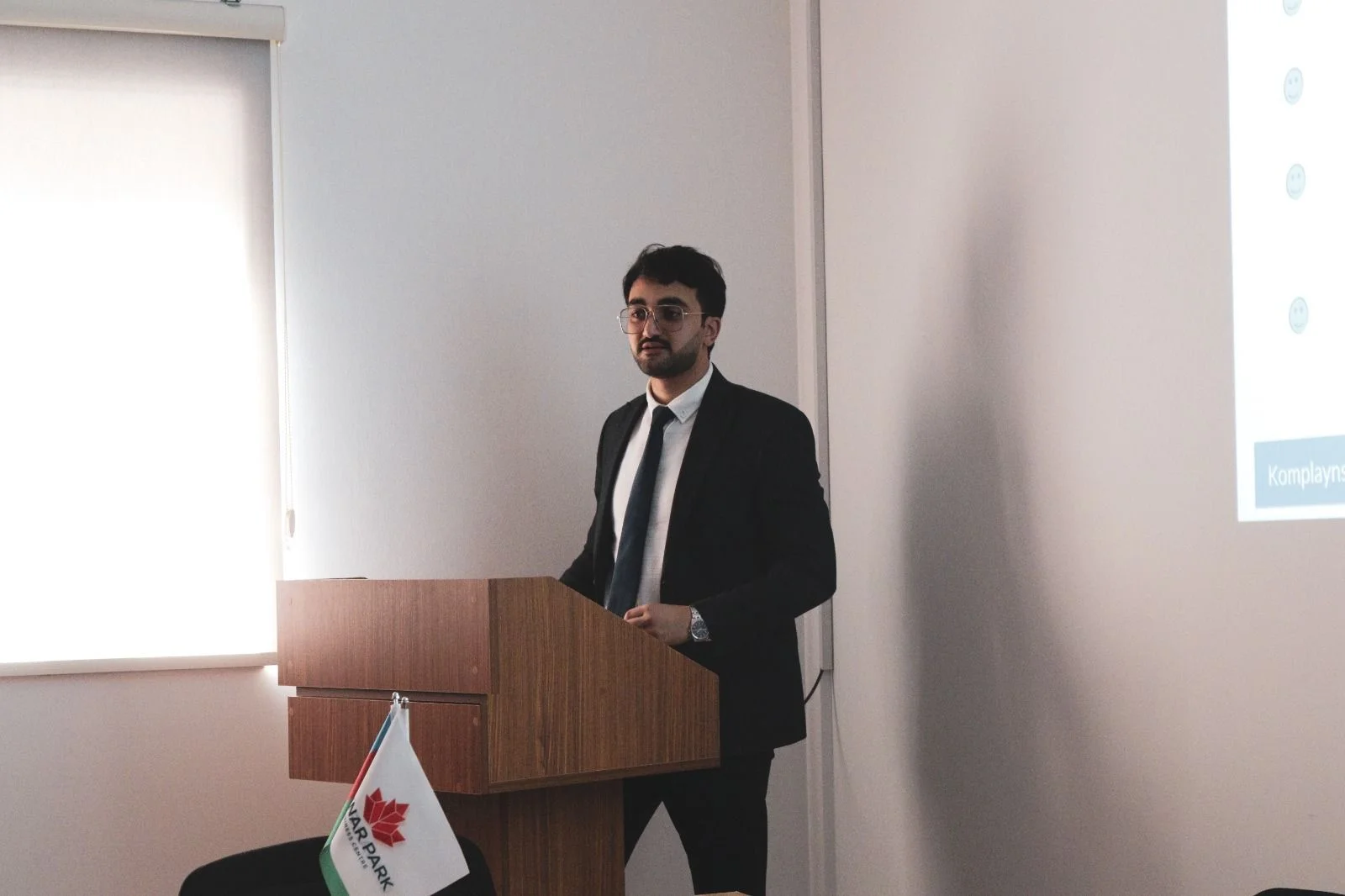
During the event, held as part of AFFA’s regular annual series of sessions, Murad Mammadli, a leading specialist in the Compliance and Anti-Match-Fixing Department, gave players and coaches detailed information about the concept of match-fixing, the risks they may face during matches and the serious damage such incidents cause to football’s integrity and reputation.
The instructor gave an extensive presentation on the role of players and coaches in matches and the importance of protecting that role from any external influence. It was noted that the conduct of players and coaches is a particularly sensitive issue in the context of match-fixing, meaning their professional behaviour must always reflect a strong sense of responsibility.
The session highlighted the important role players and coaches play in upholding football’s principles of fairness and integrity. It was noted that professionalism, adherence to principles, honesty and high professional ethical standards are integral to the work of players and coaches, and that upholding these principles is crucial to football’s credibility. The presentation explained the main motives behind match-fixing, the types of matches in which manipulation is most common, the role of sports betting in the process and the methods that may be used to influence players and coaches.
Practical scenarios were also used to discuss the ethical duties of players and coaches, the steps they should take when faced with a suspicious approach or an offer to fix a match, the need to report such incidents promptly and properly, and the serious consequences of withholding information. Particular attention was paid to approaches made via social media, the methods used by match-fixers and the importance of players and coaches managing their public and private profiles appropriately.
During the session, players and coaches were briefed on the relevant articles of AFFA’s Disciplinary Code, adopted in 2025, with emphasis on the fact that involvement in match-fixing, attempts to do so or withholding information constitute serious disciplinary offences. Specific examples from domestic and international practice were also presented. At the end of the training, participants were asked interactive questions about the session to test their knowledge.
The main aim of the awareness event is to safeguard transparency and integrity within the football community, strengthen the fight against match-fixing and further increase players’ and coaches’ sense of responsibility and awareness in this area.

This article was translated from Azerbaijani with the help of AI. Original in Azerbaijani